

How art shapes fashion design for bold, culture-driven style
TL;DR:
- Art transforms fashion into cultural statements and personal expressions.
- African heritage influences streetwear’s bold patterns, colors, and symbolic motifs.
- Streetwear is a democratic art form driven by intuitive processes and cultural relevance.
Fashion is not just something you put on your back. It is a statement, a story, and for many young people today, a direct expression of who they are and where they come from. The idea that clothing is purely functional has been quietly dismantled by a generation of streetwear lovers who treat every outfit like a canvas. Art is the engine behind this shift, turning fabric and thread into something far more powerful than utility. In this guide, we break down exactly how art shapes fashion design, why African heritage sits at the heart of bold streetwear, and what it all means for the way you dress right now.
Table of Contents
- Why art matters in fashion design
- How art transforms streetwear and youth culture
- Cultural heritage and innovation: The African influence
- Experimental art processes: From sketchbook to street
- Rethinking art’s place: Why streetwear is the new canvas
- Express your identity through art-driven fashion
- Frequently asked questions
Key Takeaways
| Point | Details |
|---|---|
| Art makes fashion expressive | Designers use art to give clothing depth, emotion, and unique personal meaning. |
| Streetwear blends cultures | Streetwear leverages global and African influences to create new forms of self-expression. |
| Creative process is evolving | Modern fashion mixes traditional sketching with hands-on experimentation like upcycling. |
| Youth are leading change | Young adults are using art-driven design to shape streetwear culture and challenge old norms. |
Why art matters in fashion design
Building on the idea that fashion is more than clothes, it helps to understand what separates a piece of clothing from a piece of culture. The answer, almost always, is art. When a designer brings artistic intention into their work, the result is not just a garment. It becomes a message, a mood, and sometimes even a movement.
Mass-market fashion focuses on volume. Speed. Trend cycles that last six weeks before something new replaces them. Artist-led design works differently. It starts with an idea, a cultural reference, a feeling, and then builds outward from there. The garment becomes the vehicle, not the destination.
“Art elevates fashion beyond utility, allowing designers to infuse cultural depth and personal expression.”
This distinction matters enormously for streetwear. The luxury streetwear movement has always drawn from art, graffiti, music, and protest. These are not decorative choices. They are deliberate acts of identity-building, and they resonate because they are honest.
The cultural and emotional benefits of art in fashion design are real and measurable:
- Identity expression: Wearers communicate who they are without saying a word.
- Cultural continuity: Designs rooted in heritage keep traditions alive in everyday life.
- Emotional resonance: Art-driven pieces create genuine connection between maker and wearer.
- Uniqueness: Artistic garments resist the copy-paste nature of fast fashion.
- Storytelling: Every pattern, colour, and cut can reference a history, a place, or a people.
For streetwear rooted in African heritage, these benefits are not abstract. They are the entire point. Researchers studying balancing function and art in fashion note that the most culturally significant pieces succeed precisely because they refuse to separate beauty from meaning. That is the standard worth chasing.
How art transforms streetwear and youth culture
After understanding the wider role of art in fashion, the next step is seeing how it actually plays out on the streets. Streetwear is not a passive category. It is one of the most responsive, fast-moving, and culturally loaded spaces in fashion today, and art is the reason why.
Young people are not waiting for permission to express themselves. They are creating their own visual languages, pulling from music, activism, ancestry, and everyday life. The journey from artistic inspiration to a streetwear trend usually follows a recognisable pattern:
- A cultural moment or idea emerges in music, protest, or community life.
- Artists and designers respond by translating that energy into visual form.
- Early adopters wear the pieces, turning them into visible signals within a community.
- The look spreads through social media, events, and word of mouth.
- The trend becomes a reference point, influencing the next wave of creative output.
This cycle is fast and it is real. Designers like Vivienne Westwood built entire careers on the idea that clothing could challenge power, not just reflect it. That spirit lives on in every bold graphic tee, every hand-stitched detail, every piece that makes someone stop and ask, “Where did you get that?”
Researchers note that fashion criticism requires distinct models from static art evaluation because fashion exists in motion, on bodies, in real social situations. A painting hangs on a wall. A hoodie walks into a room and changes the energy.
Pro Tip: To spot genuinely art-inspired streetwear, look for pieces where the design has a clear point of view. Ask yourself: does this reference something real? Does it feel like it was made with intention, or just assembled to look cool? The difference is usually obvious once you know what to look for.
For young adults using the luxury streetwear guide as a starting point, art-driven design is not a niche interest. It is the defining feature of streetwear that actually means something.
Cultural heritage and innovation: The African influence
To dig deeper into the art-fashion connection, you have to look at what happens when heritage becomes the primary source of inspiration. African art and cultural traditions have shaped global aesthetics for centuries. In streetwear, that influence is now front and centre, and it is being driven by young people who want their clothes to reflect where they come from.
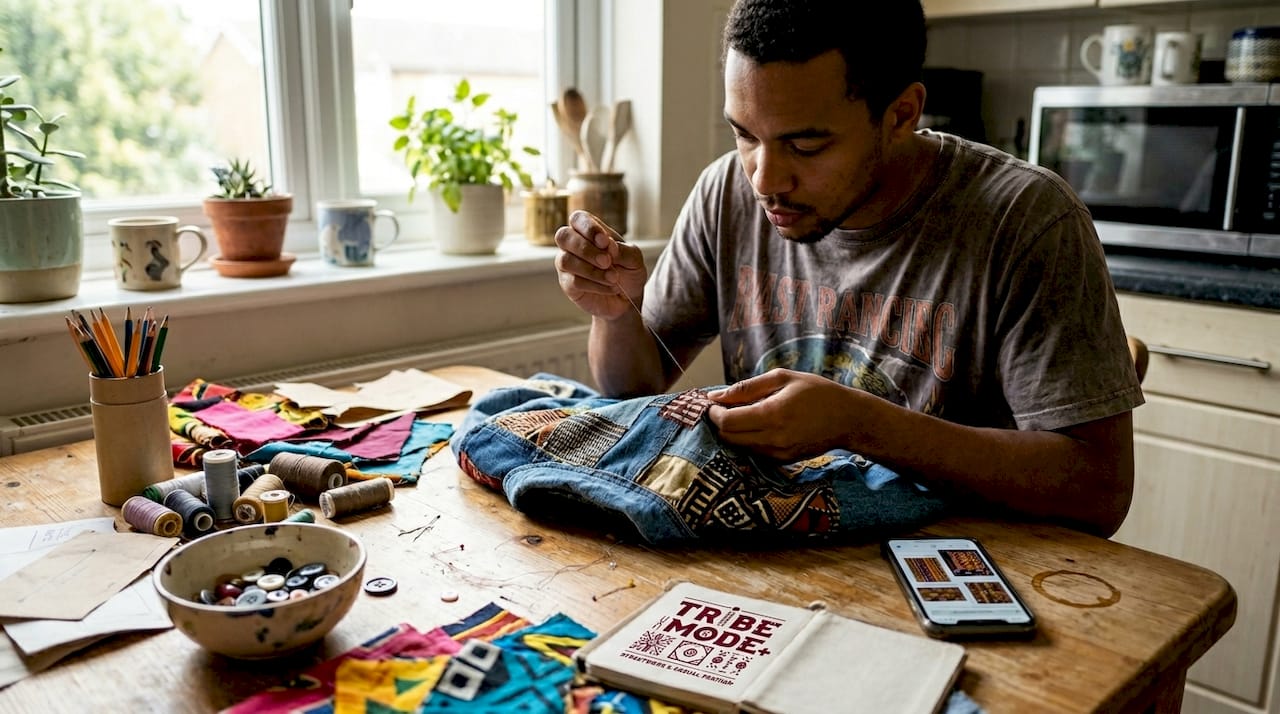
The contrast between traditional African art motifs and their modern streetwear interpretations is striking. Here is how the two worlds compare:
| Feature | Traditional expression | Contemporary streetwear || |—|—|—| | Patterns | Kente, Ankara, Adire | Graphic prints, oversized motifs | | Colours | Earth tones, bold primaries | Neon accents, contrast blocking | | Fabrics | Hand-woven, natural fibres | Performance blends, organic cotton | | Construction | Handcraft, ceremonial detail | Patchwork, upcycled panels | | Purpose | Ritual, community, identity | Self-expression, street credibility |
The design features rooted in African culture that appear most often in contemporary streetwear include:
- Bold geometric patterns drawn from Kente and Kuba cloth traditions.
- High-contrast colour combinations that command attention and carry symbolic meaning.
- Handcraft details like embroidery, beadwork, and appliqué that reference artisanal heritage.
- Patchwork and upcycling as a nod to resourcefulness and creative reuse.
- Symbolic motifs including Adinkra symbols and Sankofa imagery that carry layered meaning.
As art enables designers to infuse heritage into their work, young adults are reclaiming that heritage as something to wear with pride, not something to archive. Researchers tracking art-driven streetwear innovation confirm that this reclamation is one of the most significant creative forces in contemporary fashion. Explore how modern heritage fashion brings these ideas to life in wearable form.
Experimental art processes: From sketchbook to street
After exploring cultural inspiration, it is worth looking at how the actual creative process shapes the final garment. Not all great streetwear starts with a sketchbook. In fact, some of the most exciting pieces begin with no plan at all.
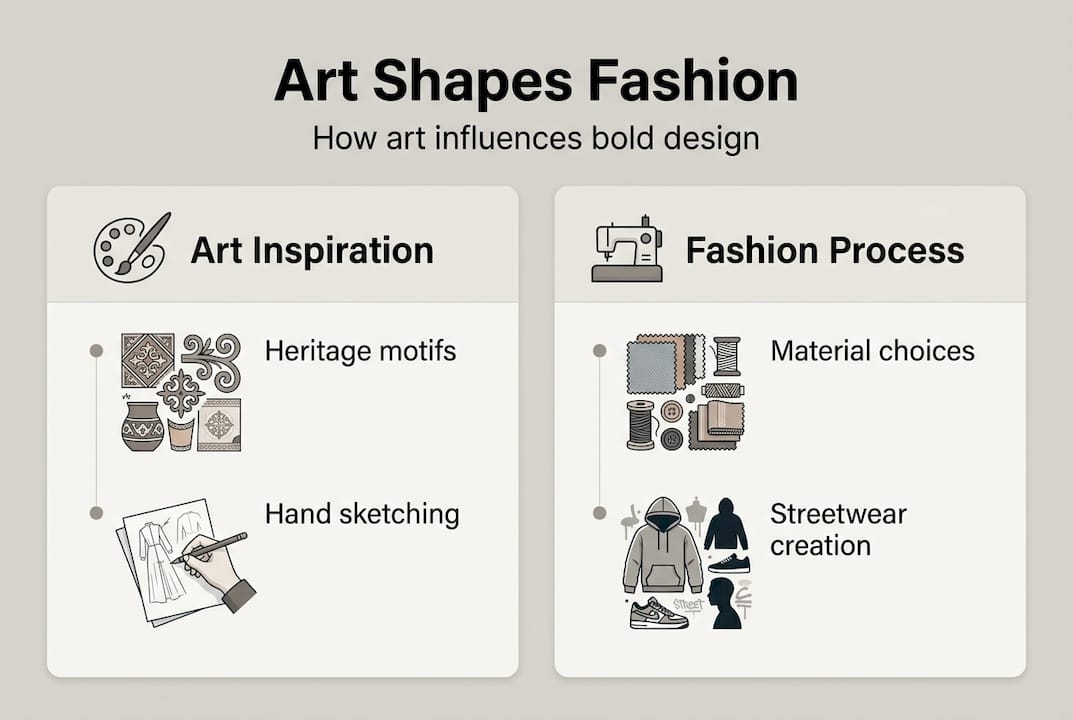
Here is how formal and experimental design processes compare in practice:
| Process | Formal sketching | Intuitive/experimental |
|---|---|---|
| Starting point | Concept drawing | Material or feeling |
| Tools | Pencil, CAD software | Scissors, fabric scraps |
| Structure | Linear, planned | Fluid, responsive |
| Output | Consistent collections | One-of-a-kind pieces |
| Best for | Brand cohesion | Bold, unexpected design |
Researchers studying intuitive art processes in fashion highlight that expert streetwear makers often work without sketches, using patching, upcycling, and direct manipulation of fabric as their primary creative medium. This is not a lack of skill. It is a different kind of mastery.
Innovation in materials is pushing this even further. Shape memory textiles, for example, can return to a pre-set form after being stretched or compressed. This kind of technology blurs the boundary between art installation and everyday clothing, creating pieces that perform as well as they look.
Pro Tip: If you want to develop your own streetwear aesthetic, try combining both approaches. Start with a rough sketch to anchor your concept, then let the material guide the final decisions. The sketch gives you direction. The fabric gives you honesty. The result is usually more interesting than either approach alone.
Bold, youth-driven fashion practice thrives in this space between structure and freedom. The best pieces feel inevitable once you see them, even though they were never planned that way.
Rethinking art’s place: Why streetwear is the new canvas
Having explored the processes and inspirations behind art-driven design, here is something the mainstream fashion world still struggles to accept: streetwear is not a lesser form of art. It is arguably the most democratic one.
Galleries have gatekeepers. Runways have budgets. Streetwear has neither of those requirements. A young person with a secondhand jacket, a vision, and a pair of scissors can create something that carries more cultural weight than a piece hanging in a white-walled gallery. That is not hyperbole. That is the lived reality of youth fashion culture in 2026.
Mainstream critics often dismiss upcycled or no-sketch design as unfinished or accidental. We think that reading completely misses the point. The absence of a formal process is itself a statement. It says: I do not need your institutions to validate what I make.
The old line between art and fashion was always artificial. Young creators are not crossing it. They are erasing it entirely, one bold outfit at a time. True expression does not live in a gallery. It walks out the door every morning.
Express your identity through art-driven fashion
Inspired to explore your own artistic identity? Tribemodeplus exists precisely for this moment. Every piece in the collection is built around the idea that clothing should carry meaning, not just cover your body.
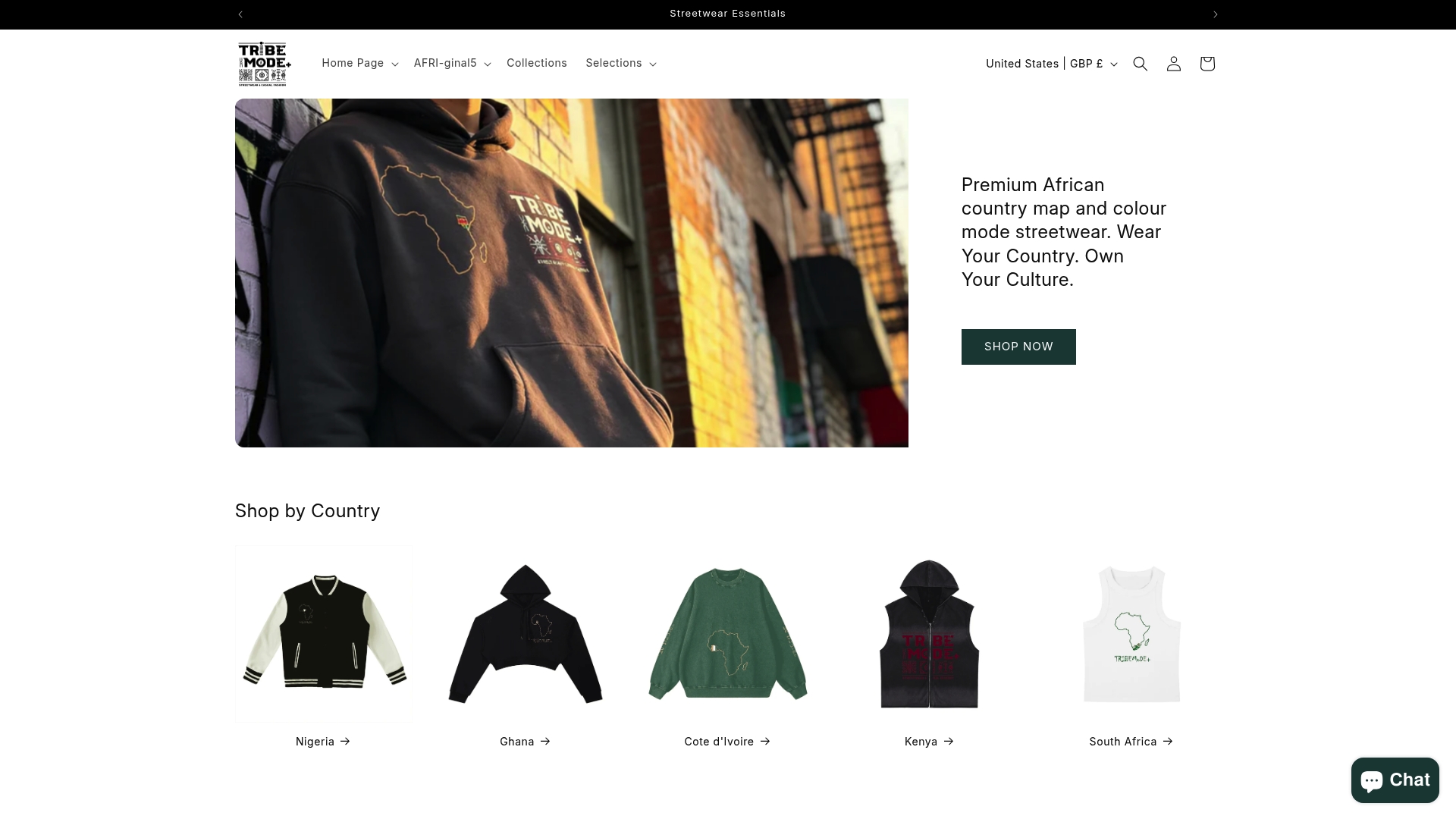
From Africa cultural designs that draw directly on heritage motifs, to statement sweatshirts that bring bold artistry into everyday wear, the range is built for people who want their wardrobe to say something real. Browse the full selection of bold fashion pieces and find the pieces that speak to your story. Art-driven streetwear is not a trend. It is a commitment to wearing your identity with confidence.
Frequently asked questions
How does art make fashion more meaningful?
Art adds cultural stories and personal depth to clothing, so that what you wear communicates identity rather than just covering your body. As art elevates fashion beyond utility, it becomes a genuine form of self-expression.
What’s the difference between art-fashion and regular clothing?
Art-fashion is designed to tell a story or share cultural values, while regular clothing focuses mainly on function or trends. Fashion uniquely balances function and artistic intent in ways that static art forms simply cannot.
How do streetwear designers use art in clothing?
Streetiwear designers use techniques like upcycling, patchwork, and heritage referencing to create expressive, one-of-a-kind pieces. Intuitive, art-driven processes such as patching and direct fabric manipulation are central to this approach.
Why is African heritage important in art-driven streetwear?
African heritage brings powerful symbolism, bold colour traditions, and rich pattern languages that inspire genuinely new designs while honouring cultural roots. Art enables designers to carry that heritage forward in ways that feel current and relevant.
Recommended
- What is Luxury Streetwear? A Guide to a Modern Style Movement – TRIBEMoDE+
- TRIBEMoDE+: Trendy Fashion & Accessories Online Store
- Explore Africa Cultural Designs - Africa cultural designs | Modern pieces reflecting heritage. – TRIBEMoDE+
- Raw-Hem Color-Block Raglan Crop Sweatshirt - Ivory Coast raglan crop sweatshirt| Modern, comfy, statement piece – TRIBEMoDE+
- What is fashion-forward? Elevate your style in 2026 – INCIDENT